What is VBAC?
VBAC stands for vaginal birth after caesarean.
It means giving birth vaginally in a pregnancy that follows a previous caesarean.
You might also see the term VBA2C (vaginal birth after two caesareans) or VBAMC (vaginal birth after multiple caesareans).
VBAC is possible after one caesarean, and it is possible after more than one.
The evidence shows VBAC is safe for most people, that preparation, continuity of care, and place of birth all influence outcomes. It also acknowledges that repeat caesarean carries its own set of risks and considerations that deserve equal weight in any decision.
What the evidence says:
VBAC is safe for most people.
Uterine rupture is rare
The most commonly quoted figure is 0.5%, but more recent international research, including the INOSS study of over 334,000 women, found the rate to be 0.22%, or approximately 1 in 500. Around 90% of babies survived and severe outcomes were rare (INOSS, 2019).
For context, cord prolapse, a complication that applies to every pregnant person, has a comparable risk of between 0.1 and 0.5% and is not usually discussed in the same way in routine care.
VBAC after more than one caesarean
NICE Quality Statement 1 on Caesarean Birth states that there is little or no difference in risk between a planned caesarean birth and a planned vaginal birth for people who have had up to four previous caesarean births (NICE, 2021).
Despite this, many people are still told they cannot have a VBAC after more than two caesareans. That isn’t supported by the evidence or the guidance.

Beyond the research, it’s important to remember that your birth rights sit above any hospital policy. You are entitled to make informed choices about how you give birth, regardless of how many caesareans you’ve had.

Where and how you give birth matters
The Birthplace in England study found that emergency caesarean rates for people attempting VBAC were significantly lower in midwifery led settings, at around 12.9%, compared to 30.4% in obstetric units (Rowe et al, 2016).
More recent 2026 research also found that VBAC was more likely in out of hospital settings, including birth centres and home birth, with outcomes at home showing no significant difference to those in hospital (Pancetti et al, 2026).
The impact of birth preparation
Research published in 2026 by Pancetti et al. found that:
When it came to outcomes for babies, the research showed VBAC resulted in:
Nothing about birth can be guaranteed. The research shows that doing the work to prepare makes a real difference, both to the likelihood of a VBAC and to outcomes for you and your baby.
The benefits of birth preparation go beyond the statistics. Even if your path changes along the way, the work you’ve done means you walk into every decision informed, grounded, and in your own authority.

So what does this mean for you?
If you’re reading this because you’re considering a VBAC, here’s what the evidence is really saying.
VBAC is safe for the majority of people who have had a caesarean.
– Success rates are high
– Serious complications are rare
– The way VBAC is supported matters enormously
You can’t guarantee a VBAC, but you can do a lot to stack the odds in your favour.
Why The VBAC Hub exists
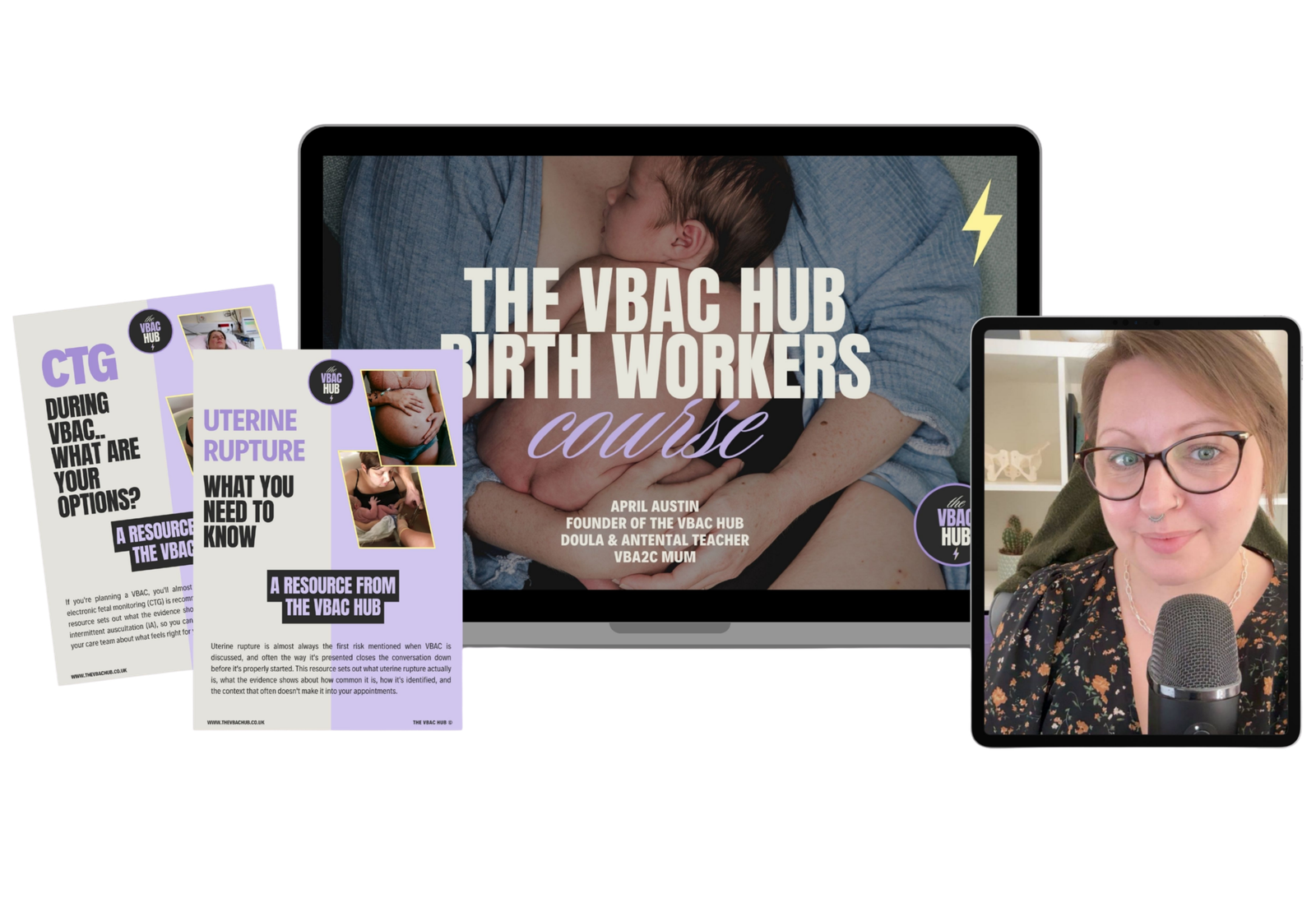
The VBAC Hub is here to make sure that anyone planning a VBAC in the UK can access the preparation and the people they need to do this well.
That means evidence-based birth preparation for parents, through The VBAC Birth Prep Course.
Alongside specialist VBAC training for birth workers on the ground, so that the doulas, antenatal teachers, and midwives you’re working with genuinely understand this pathway.
When you look at the evidence, it’s clear. Preparation matters, continuity matters, and having people around you who actually get it can change the course of your birth.
Ready to prepare for your VBAC?